Outdoor Property Services in Bayport
Fitzgerald Lawn Care helps Bayport homeowners to manage their properties through Minnesota’s changing seasons. Our services include mowing, edging, aeration, mulch installation, lawn insect control, mole and pocket gopher trapping, snow plowing, and snow removal.
We begin by reviewing the areas that require service. This allows us to account for the property layout, current lawn conditions, access requirements, and seasonal concerns before preparing an estimate.
Property Maintenance Through Every Season
Bayport’s location along the St. Croix River gives the community a mix of established neighborhoods, mature trees, landscape beds, sloped ground, paved access areas, and properties close to natural spaces.
Grass beneath tree canopies may develop differently from turf exposed to direct sunlight. Soil can remain soft in some areas while becoming compacted along walking routes, driveway edges, or frequently used sections of the lawn. Wooded and natural borders may also create suitable surroundings for insects and burrowing animals.
When winter arrives, narrow driveways, parked vehicles, limited snow-storage space, and repeated storms can complicate property access. Fitzgerald Lawn Care considers these features when planning lawn, pest, trapping, mulch, or snow services.
Routine Turf Care in Bayport
Routine maintenance helps keep grass manageable and outdoor areas looking orderly. The best approach depends on the lawn’s size, rate of growth, shade exposure, soil condition, and number of borders or obstacles. Fitzgerald Lawn Care offers lawn care for residential and commercial properties in Bayport. Service can be planned around the property’s recurring and seasonal maintenance requirements.
Turf growth changes with temperature, rainfall, and available sunlight. During active growing periods, grass can become tall quickly. Hot or dry conditions may slow that growth. A suitable mowing schedule keeps the lawn controlled without relying on the same interval under every condition. We plan cutting service around the property and expected seasonal growth.
Grass can spread over pavement or enter landscape beds if borders are not maintained. Edging creates a defined line beside sidewalks, driveways, curbs, and planted areas.
Properties with numerous paths, beds, or paved sections may require more edging than open lawns. These details are considered when estimating maintenance.
Repeated traffic can press soil particles together and reduce space around turf roots. Compaction frequently develops along walking paths, play areas, equipment routes, and other heavily used sections.
Aeration creates openings through dense soil so water and air can move more effectively into the root zone. We check the lawn’s condition before determining whether aeration would be useful.
Spring moisture can produce fast turf growth, while summer heat may cause exposed areas to slow down or lose color. Leaves, cooler temperatures, and reduced growth create different maintenance priorities during fall.
Fitzgerald Lawn Care adjusts recommendations according to the time of year rather than treating every visit the same way.
Landscape Bed Improvements
New mulch can refresh faded landscape beds and create clearer separation between planted areas and surrounding turf. It can also help moderate soil temperature, retain moisture, and reduce some weed growth.
Fitzgerald Lawn Care evaluates the bed dimensions, existing material, plant locations, borders, and installation access before determining the project requirements.
Old mulch, weeds, leaves, branches, and encroaching grass may need attention before installation begins. The preparation required depends on the bed’s existing condition.
Reviewing these details in advance helps establish the project scope and the amount of material needed.
Mulch performs best when it is spread consistently across the bed. Heavy piles against tree trunks and plant stems may trap moisture where it is not wanted.
We install mulch within the approved areas and leave appropriate space around trees, shrubs, flowers, and landscape fixtures.
Borders can lose definition as soil shifts, grass spreads, and mulch moves. Refreshing the edge helps keep new material inside the bed and provides a cleaner transition to the lawn.
The existing border and any requested edge work can be reviewed as part of the estimate.
Not every landscape bed needs to be rebuilt. When existing mulch is in suitable condition but has settled or faded, an additional layer may provide the needed refresh.
We consider the depth already present so new material is not applied excessively.
Weed Management for Bayport Turf
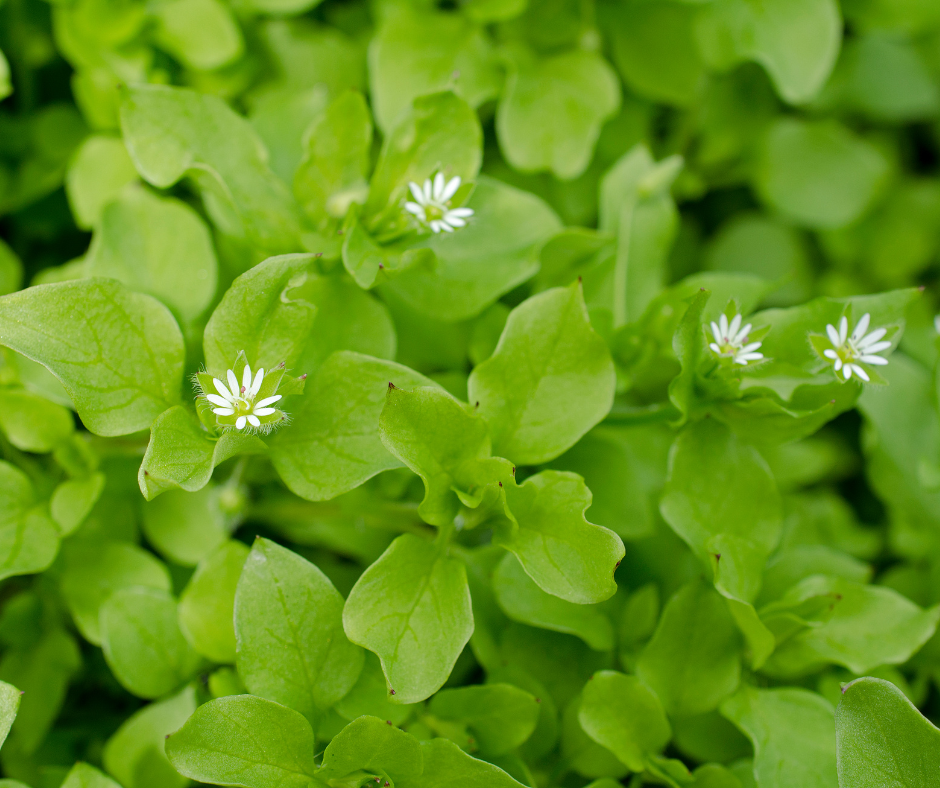
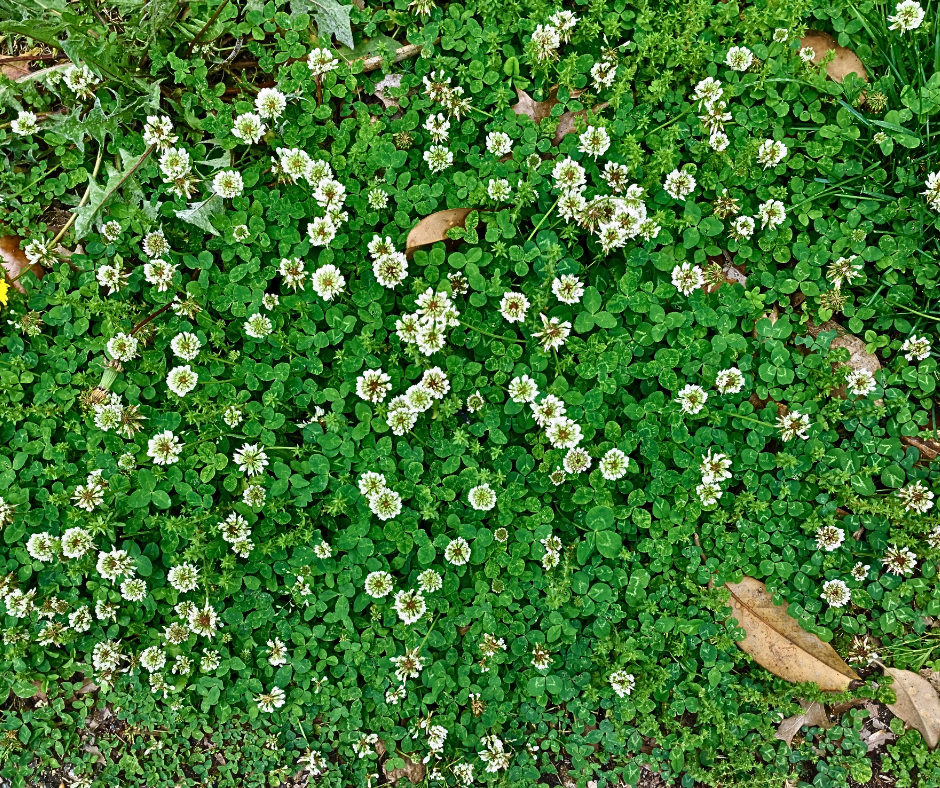
Bayport lawns may contain mature tree cover, shaded edges, compact neighborhood turf, and sections influenced by runoff or uneven moisture. Weeds can spread when these conditions weaken grass and create openings in the lawn.
Fitzgerald Lawn Care examines the unwanted growth and the surrounding turf before selecting a weed-control approach.
Weeds concentrated beneath trees may be associated with thin grass and limited sunlight. Growth along sidewalks or driveways may reflect heat, disturbed soil, or repeated foot traffic.
The location and pattern help explain why certain sections are affected more heavily than others.
Some weeds are easier to manage while young and actively growing. Others may require attention before they emerge or during a particular seasonal stage.
Weather, weed development, and lawn condition are reviewed when determining treatment timing.
Removing weeds does not automatically produce thicker grass. Shade, drainage, compacted soil, root competition, and mowing practices may continue limiting turf coverage.
Fitzgerald Lawn Care can identify lawn conditions that should be considered alongside weed treatment. Homeowners should also point out newly seeded areas, sensitive plantings, and products recently applied to the yard.
Help for Damaged Turf
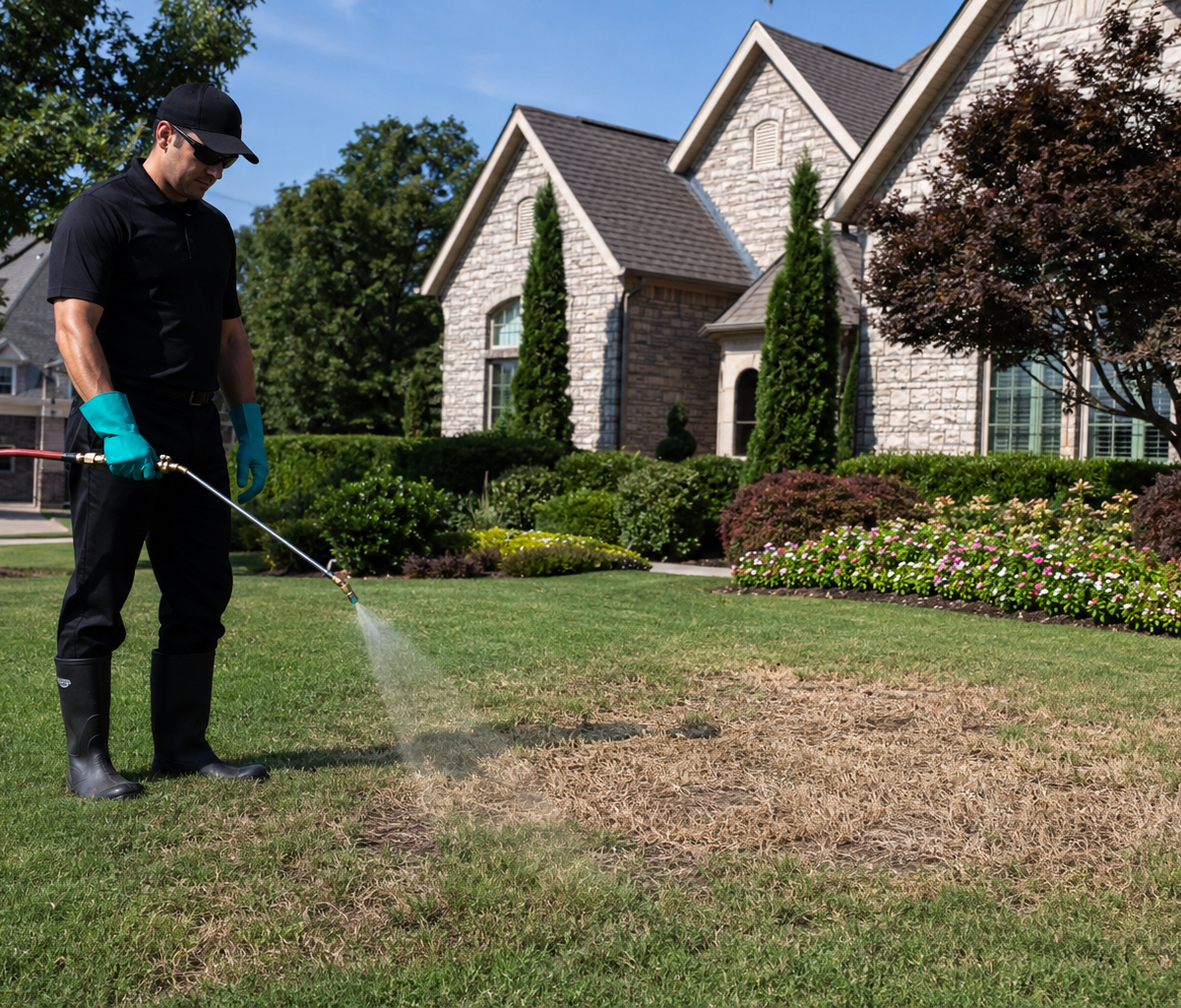
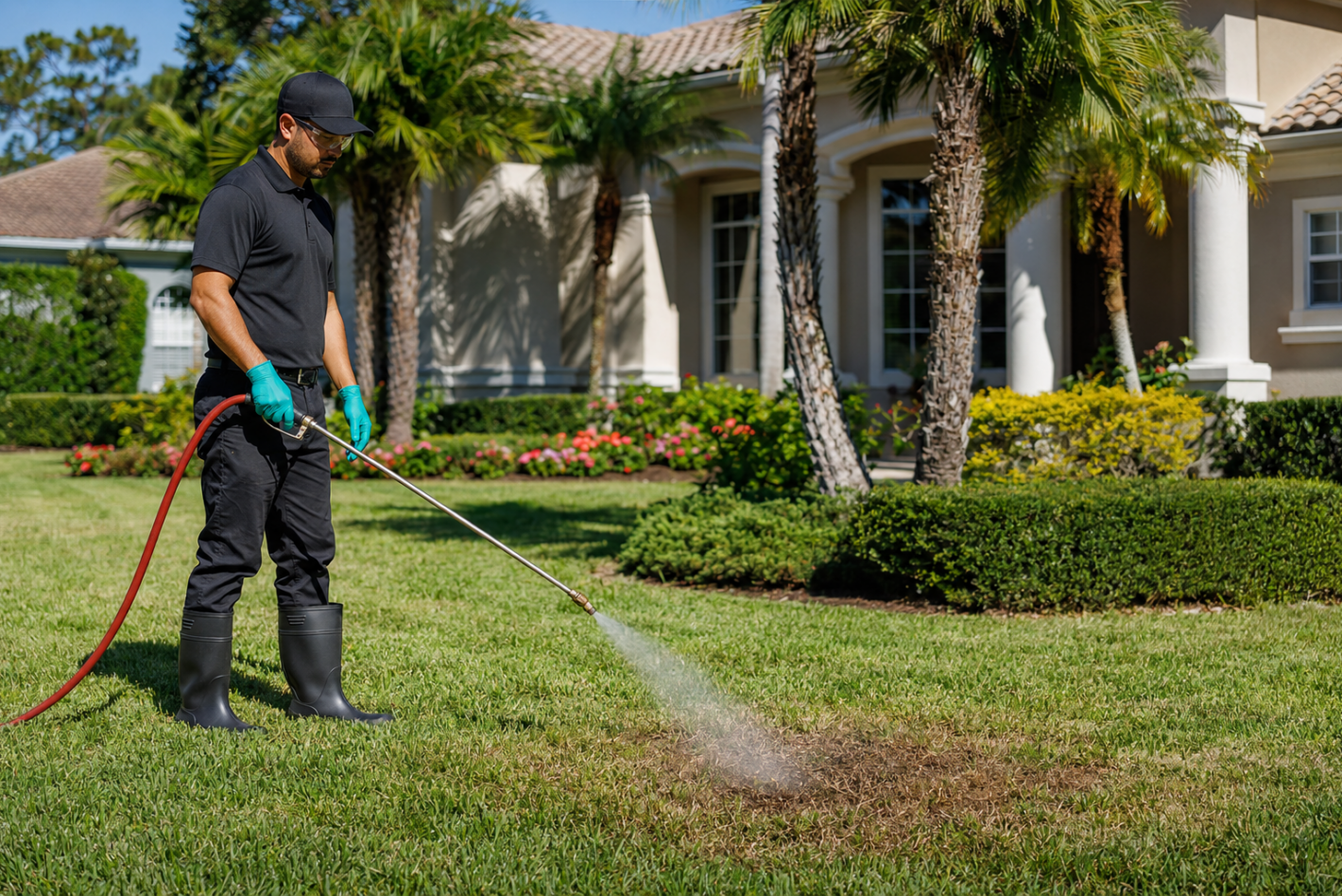
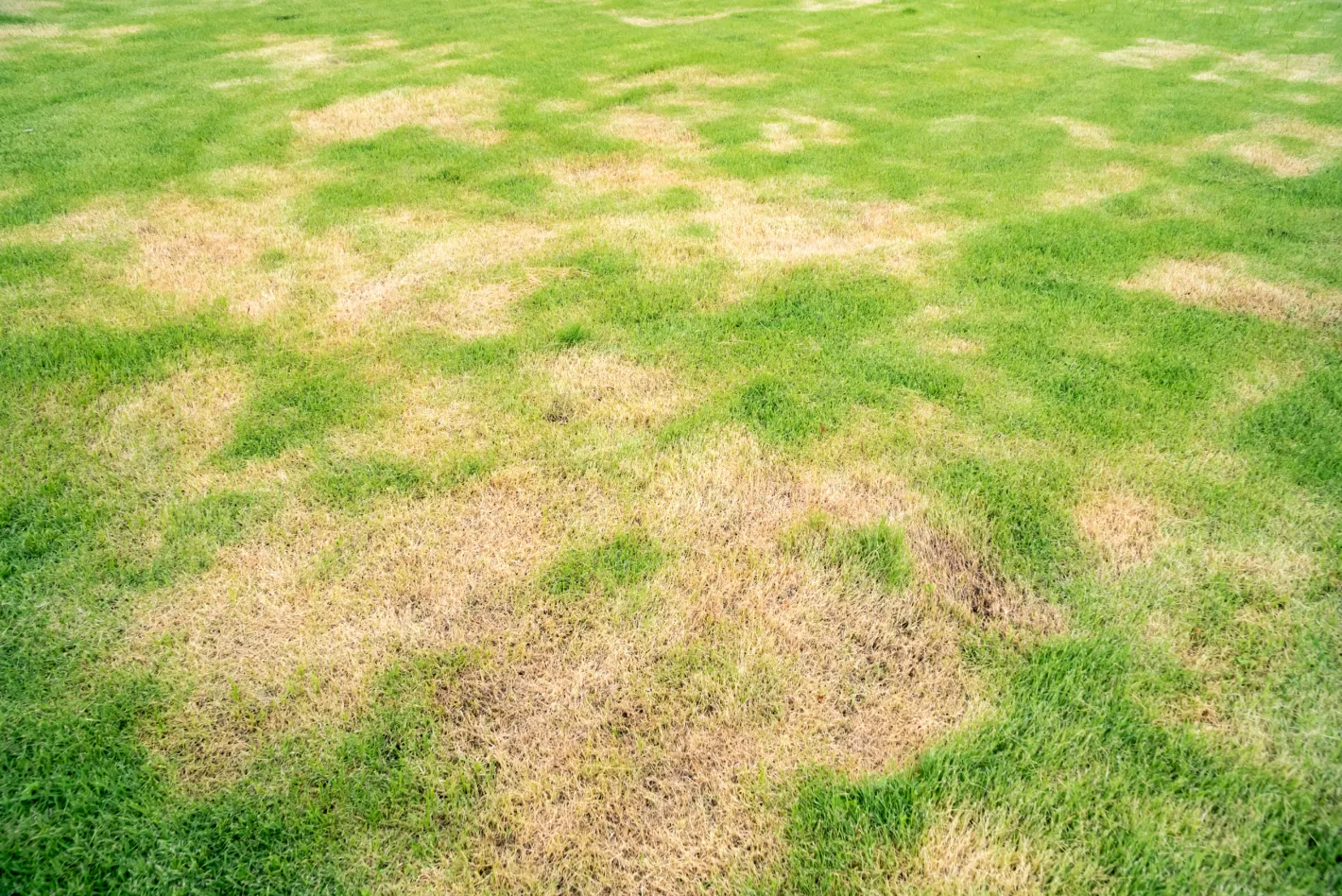
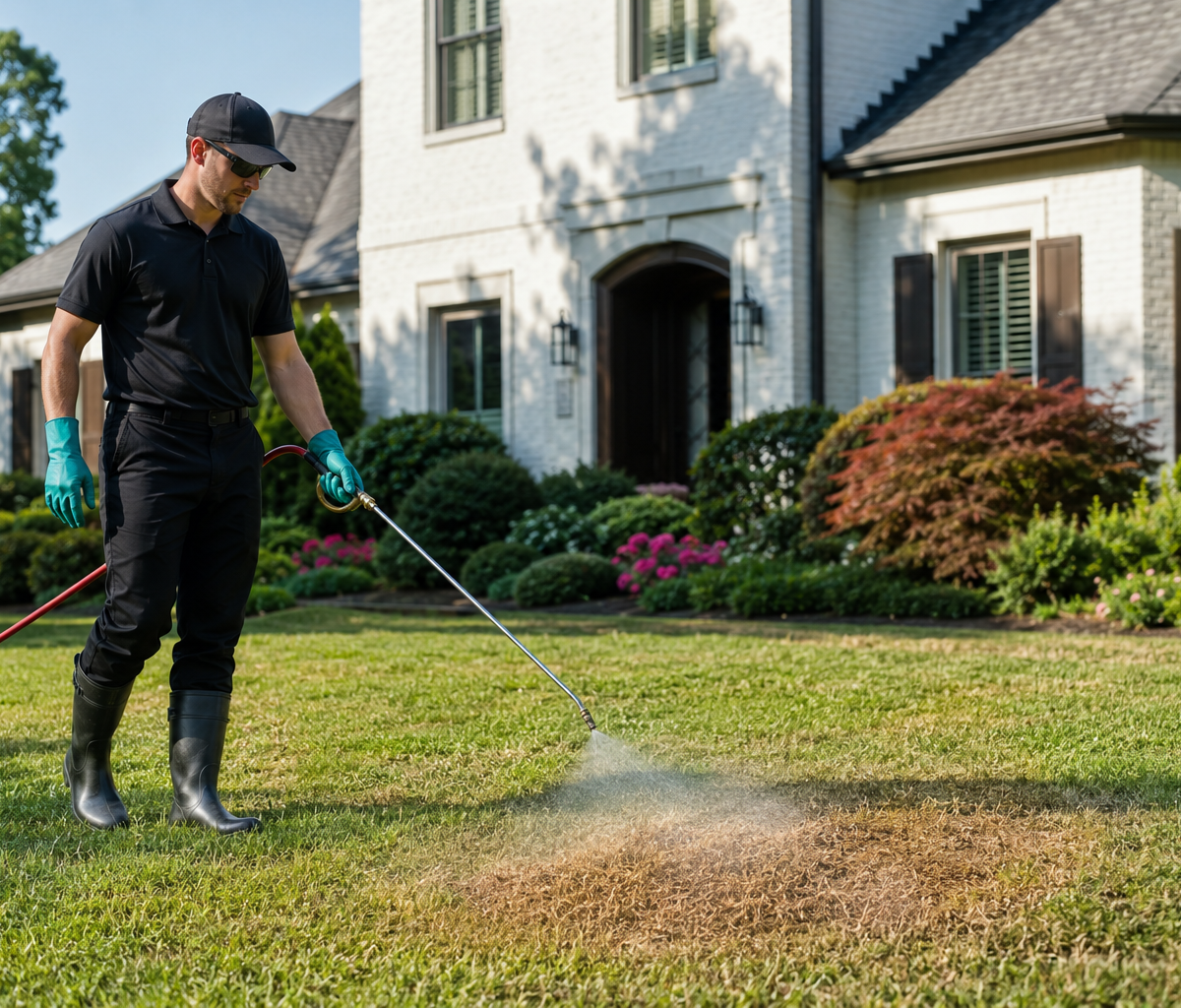
Grass can turn brown or thin for several reasons, including insects, dry soil, excess moisture, disease, shade, or compaction. Applying insect control without identifying pest activity may leave the real problem unresolved. Fitzgerald Lawn Care inspects the affected location and looks for evidence of grubs, beetles, or other lawn insects before recommending treatment.
Grubs live below the surface and feed near grass roots. Turf with significant root damage may feel loose, develop irregular brown areas, or pull up more easily than healthy grass.
Wildlife digging in the yard may be searching for underground insects, but digging alone does not confirm an infestation. We examine the soil and roots for supporting evidence.
Seeing insects in a yard does not necessarily mean they are harming the turf. The type of insect, its numbers, location, and connection to visible damage should be considered first.
Identification allows treatment to focus on pests affecting serviced lawn areas.
Dry ground, overly wet soil, compacted areas, and shade stress can resemble insect damage. The location and progression of damaged grass often provide useful clues.
We assess the damage pattern, grass blades, roots, and surrounding conditions before recommending control.
Eliminating an active pest does not replace lost roots or grass. Damaged sections may require time and appropriate lawn care to recover.
Fitzgerald Lawn Care explains what the insect service is intended to control and what property care may help afterward.
Control for Underground Lawn Activity
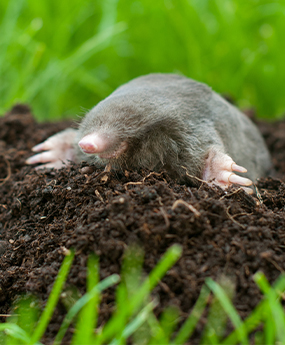
Moles and pocket gophers can leave lawns uneven through tunneling, digging, and soil displacement. Because their burrow patterns differ, locating recent activity is an important first step.
Fitzgerald Lawn Care provides trapping based on visible tunnels, mounds, and active routes around the property.
Moles may create shallow feeding tunnels as well as deeper travel routes. A visible ridge can remain after the animal has stopped using it.
We look for signs of recent movement so traps can be placed in locations more likely to remain active.
Pocket gophers move excavated soil to the surface while expanding underground burrows. The shape and arrangement of the resulting mounds can help separate their activity from mole damage.
We also check nearby ground for additional evidence before planning trap placement.
Burrowing activity can move from one part of a yard to another. Monitoring helps determine whether selected routes remain active or whether trap placement should be adjusted.
The recommended follow-up depends on what is found during service.
Fresh ridges or mounds can indicate continued movement, another active tunnel, or more than one animal. Customers should note new activity and avoid disturbing marked trapping locations.
Snow Management for Bayport Properties
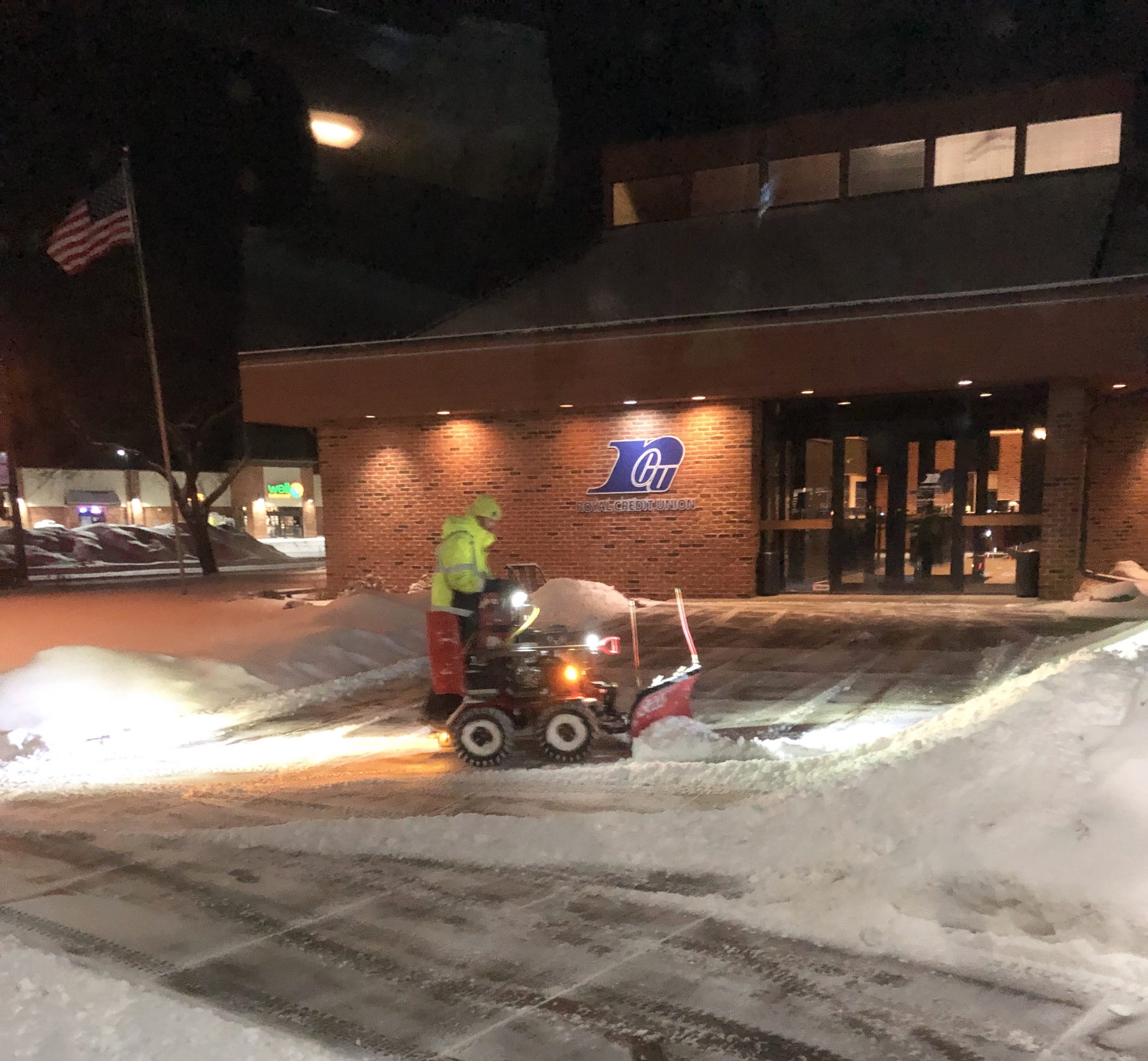
Snowfall can quickly narrow driveways, cover parking spaces, and restrict access to entrances. As piles grow during the winter, finding practical storage areas may become increasingly difficult. Fitzgerald Lawn Care provides snow plowing and snow removal for Bayport homes and commercial properties. Service planning accounts for pavement layout, obstacles, traffic needs, and available space.
Driveway length, width, slope, and surface all affect plowing. Mailboxes, landscaping, retaining walls, parked vehicles, and utility features can further limit maneuvering room.
Before service, movable objects and vehicles should be cleared from designated areas whenever possible.
Businesses may need parking spaces, driving lanes, entrances, and loading areas kept accessible. We review the site to understand traffic patterns and determine where plowed snow can be stored.
Plowing keeps access areas open by pushing snow elsewhere on the property. Eventually, piles may occupy parking spaces, narrow travel lanes, or block sightlines.
Snow removal may be requested when accumulated material needs to be moved away instead of stored on-site.
Smaller lots and properties with extensive landscaping may provide limited room for snow piles. Storage locations should avoid entrances, drainage routes, and areas where melting and refreezing could create additional concerns.
Local Lawn and Winter Conditions
Bayport is located along the St. Croix River and experiences substantial changes between the growing season and winter. Mature tree cover can limit sunlight in established neighborhoods, while open areas may experience faster moisture loss during summer. Spring thaw can leave soft ground, and repeated use can compact lawn sections once the soil begins drying. Natural borders may provide habitat for insects, moles, and pocket gophers.
During winter, storms and drifting snow can affect residential streets, driveways, sidewalks, parking areas, and business entrances. Property-specific conditions guide our recommendations throughout the year.
Local Lawn, Pest and Snow Service
Fitzgerald Lawn Care serves Bayport with lawn mowing, edging, aeration, mulch installation, lawn pest control, mole and pocket gopher trapping, snow plowing, and snow removal.
We review the requested work, discuss relevant property conditions, and prepare an estimate for the selected services.
Fitzgerald Lawn Care also serves:
Questions About Bayport Property Care
Fitzgerald Lawn Care provides lawn maintenance, mulch installation, insect control, mole and pocket gopher trapping, snow plowing, and snow removal in Bayport, Minnesota. Describe the service you need and identify the areas requiring attention. We will evaluate the property, discuss available options, and prepare an estimate.