

Local Winter Snow Removal
Fitzgerald Lawn Care provides snow plowing and snow removal services across Western Wisconsin and Eastern Minnesota. We clear driveways, parking areas, private drives, walkways, steps, entrances, and other priority surfaces when snowfall reaches two inches or more.
Available services include plowing, snow blowing, shoveling, salting, sanding, and de-icing. Before winter work begins, we review the property, confirm what is included, mark hidden obstacles, and decide where cleared snow will be placed.
Your Six-Step Winter Plan
We look at driveways, parking areas, private drives, walkways, steps, entrances, slopes, curbs, gates, and other surfaces that may need clearing.
We look at driveways, parking areas, private drives, walkways, steps, entrances, slopes, curbs, gates, and other surfaces that may need clearing. Tell us which areas need attention first and whether access hours, parked equipment, gates, or other property conditions affect the route.
The estimate identifies every surface included in the work. Plowing an open driveway or parking area does not automatically include nearby steps, walks, or entrances. Snow blowing, shoveling, salting, sanding, and de-icing are also listed when included.
Curbs, drains, parking stops, landscape borders, low walls, hydrants, culverts, and utility equipment can disappear under snow. Visible markers help the operator identify those boundaries. Move bins, trailers, portable signs, hoses, cords, and loose equipment away from the work area before service begins.
We identify locations that can hold cleared snow without blocking entrances, visibility, drainage, parking, or room for later storms. Let us know if construction, parked equipment, or another property change makes an agreed storage location unavailable.
Fitzgerald begins snow removal when accumulation reaches two inches or more. Arrival time depends on snowfall rate, storm length, wind, drifting, road conditions, and the scheduled route. Snow may continue falling after a visit during a long storm. The service plan will explain how continued accumulation is handled.
The crew plows, blows, shovels, or removes snow from the agreed surfaces. Salting, sanding, or de-icing is completed only where it appears in the plan. Weather can change after service. Wind may return snow to an open area, and melting snow may refreeze when temperatures fall.

A few steps before the crew arrives can prevent delays and leave fewer areas blocked by snow.
A plow cannot clear beneath a parked vehicle. Follow the agreed parking plan and move cars, trailers, bins, or equipment from the service area when possible.
Use visible markers around curbs, drains, low walls, landscape edges, culverts, utility equipment, and other features that may become difficult to see.
Plows and blowers need room to turn, reverse, and move snow. Keep people and pets away while the crew is operating equipment.
Avoid parking or placing equipment where cleared snow is expected to go. A blocked storage area can make it harder to clear the rest of the property.
Wind can push snow back across a cleared surface. Meltwater can also run over pavement and freeze after dark. Check slopes, shaded walks, entrances, and areas near downspouts as temperatures change.
Snow Services for Each Area
Different snow services address different parts of the property.
Plowing moves snow from driveways, parking areas, private drives, and other suitable open surfaces. The operator needs enough room to turn, work around obstacles, and push snow toward an agreed storage location. Gravel, slopes, tight corners, parked vehicles, and limited storage space can affect how an area is cleared.
Blowers and shovels can reach agreed walkways, steps, entrances, and narrow spaces that a plow cannot enter. These areas must be included in the estimate rather than assumed as part of plowing.
Snow removal moves snow away from the surfaces listed in the plan and into agreed storage areas. Properties with limited space may need a separate arrangement when piles reduce parking, block sightings, cover entrances, or leave too little room for another storm. Any work beyond the agreed storage plan will be explained in the estimate.
Salt and other de-icing materials can help loosen packed snow or ice when surface temperature and weather conditions allow. They cannot stop new ice from forming if moisture returns or temperatures continue to fall.
Sand adds traction to a slippery surface but does not melt ice. It may be used when traction is the main concern or cold conditions limit how well a melting material performs.
Watch for Ice After Plowing
A plowed surface may still have packed snow, moisture, or a thin layer of ice. Sunlight can melt nearby piles during the day, allowing water to run across a driveway, parking lane, entrance, or walkway before freezing after dark.
Dry snow can drift back over an open surface. Wet snow takes longer to move and creates heavier piles. Freezing rain may leave a slick layer that a plow blade cannot remove.
Driveway entrances near public roads
Parking lanes and turnaround areas
Slopes, ramps, steps, and sharp turns
Shaded pavement beside buildings
Walkways below roof edges
Loading areas and building entrances
Downspouts and drainage routes
Open surfaces where wind causes drifting
The National Weather Service winter safety guidance notes that black ice can be difficult to see when temperatures are near freezing. Salting, sanding, and de-icing can help when included, but conditions may continue changing after service.
Choose the Service Schedule
Fitzgerald performs snow removal when accumulation reaches two inches or more. The covered surfaces, service trigger, priority areas, and included work are confirmed before winter.
Requested service may suit a property that does not need clearing after every snowfall. Availability can be limited during a large storm when scheduled routes are already being serviced.
Setting up service before regular winter weather begins gives Fitzgerald time to review the property, confirm route availability, mark obstacles, and plan where the snow will go.
Request an estimate when:
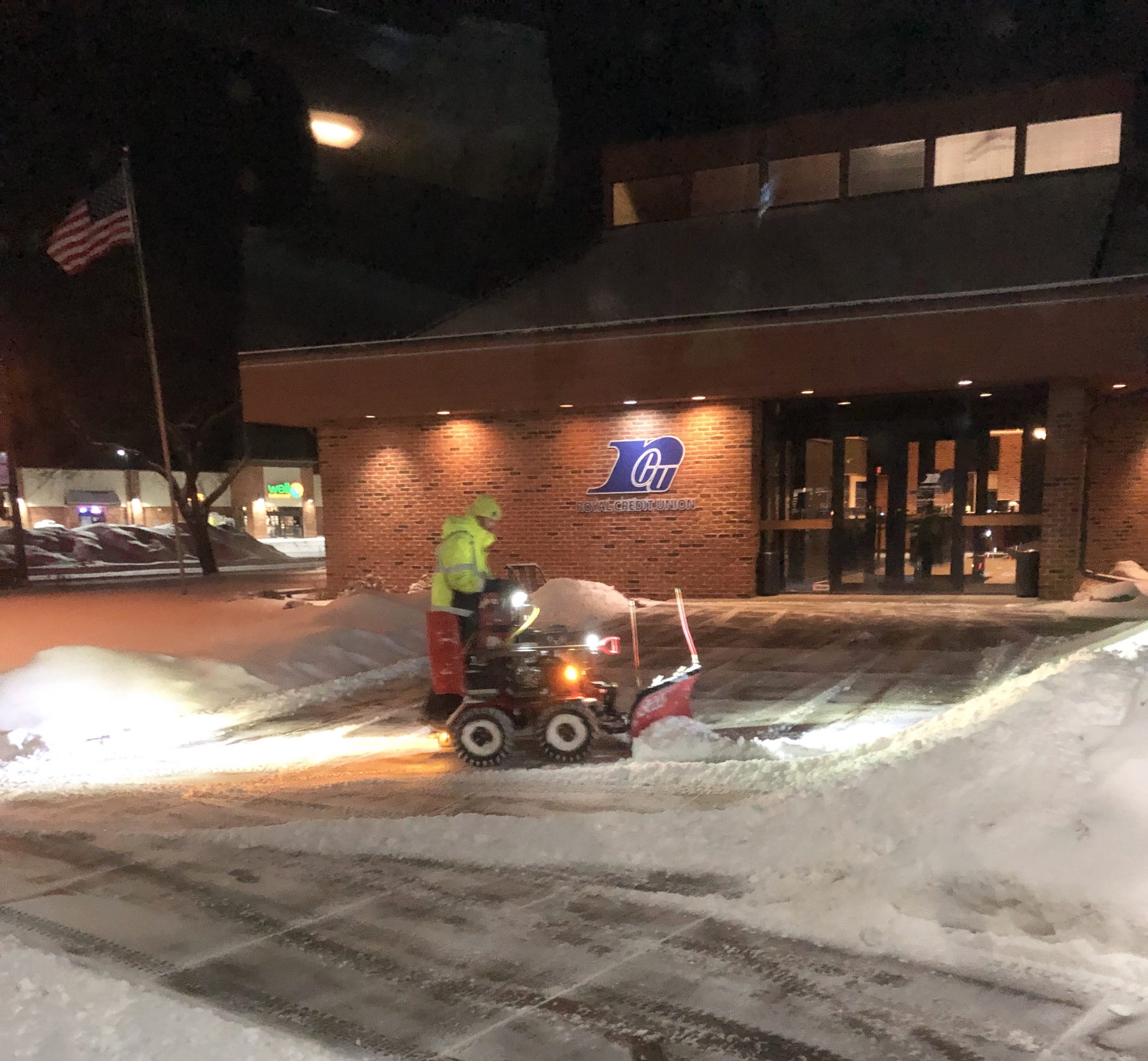

Fitzgerald provides one snow-removal service with a plan based on the surfaces and priorities at each property.
The plan may cover driveways, private drives, sidewalks, front entrances, shared walkways, and other agreed areas. Vehicles, bins, toys, and loose items should be moved before the crew arrives.
The plan may cover driving lanes, parking spaces, entrances, employee walkways, loading areas, and other priority surfaces. Snow placement should protect parking, deliveries, visibility, and room for future storms. The estimate will clearly identify which areas are included, where snow will be placed, and whether ice treatment is part of the service.
Local Experience Since 1998
Fitzgerald Lawn Care has served communities across Western Wisconsin and Eastern Minnesota since 1998. We review the property before winter so the crew has clear instructions once snow arrives.
If vehicles, priority areas, access needs, or property conditions change during the season, contact Fitzgerald before the next visit.

Need help with the property after winter?
Lawn care and maintenance: Includes mowing, fertilization, weed control, aeration, overseeing, dethatching, and seasonal cleanup.
Mulch installation: Refreshes landscape beds and covers exposed soil around established plants.
Lawn pest and insect control: Addresses grubs and other insects that damage grass and plants.
Mole and pocket gopher trapping: Addresses animals leaving tunnels, mounds, and raised soil.
Five-step fertilization: Provides scheduled lawn feeding and weed treatment from early spring through fall.
Common Snow Service Questions
Here are answers to common questions about snow service triggers, property preparation, service areas, ice treatment, and scheduling.
Arrange service before snow covers the driveway, parking area, entrance, or walkway. Fitzgerald Lawn Care will review the property, confirm the priority surfaces, identify snow-storage locations, and explain which services fit each area.
Your estimate will cover the two-inch snowfall trigger, property preparation, plowing areas, walkway work, snow placement, ice-treatment options, and pricing.