
Local Burrowing Pest Care
Fitzgerald Lawn Care uses trapping to address moles and pocket gophers leaving tunnels, raised soil, and mounds across properties in Richmond, WI.
Your Trapping Service Plan
Traps should be placed where the animal is currently active, not in an old tunnel that is no longer being used.
We look for raised tunnels, soil mounds, soft ground, damaged grass, and other signs of recent activity.
Not every visible tunnel is still in use. The tunnel pattern and fresh soil help us decide where the animal is likely to be moving.
Moles and pocket gophers leave different signs. Identifying the likely animal helps determine where and how traps should be placed.
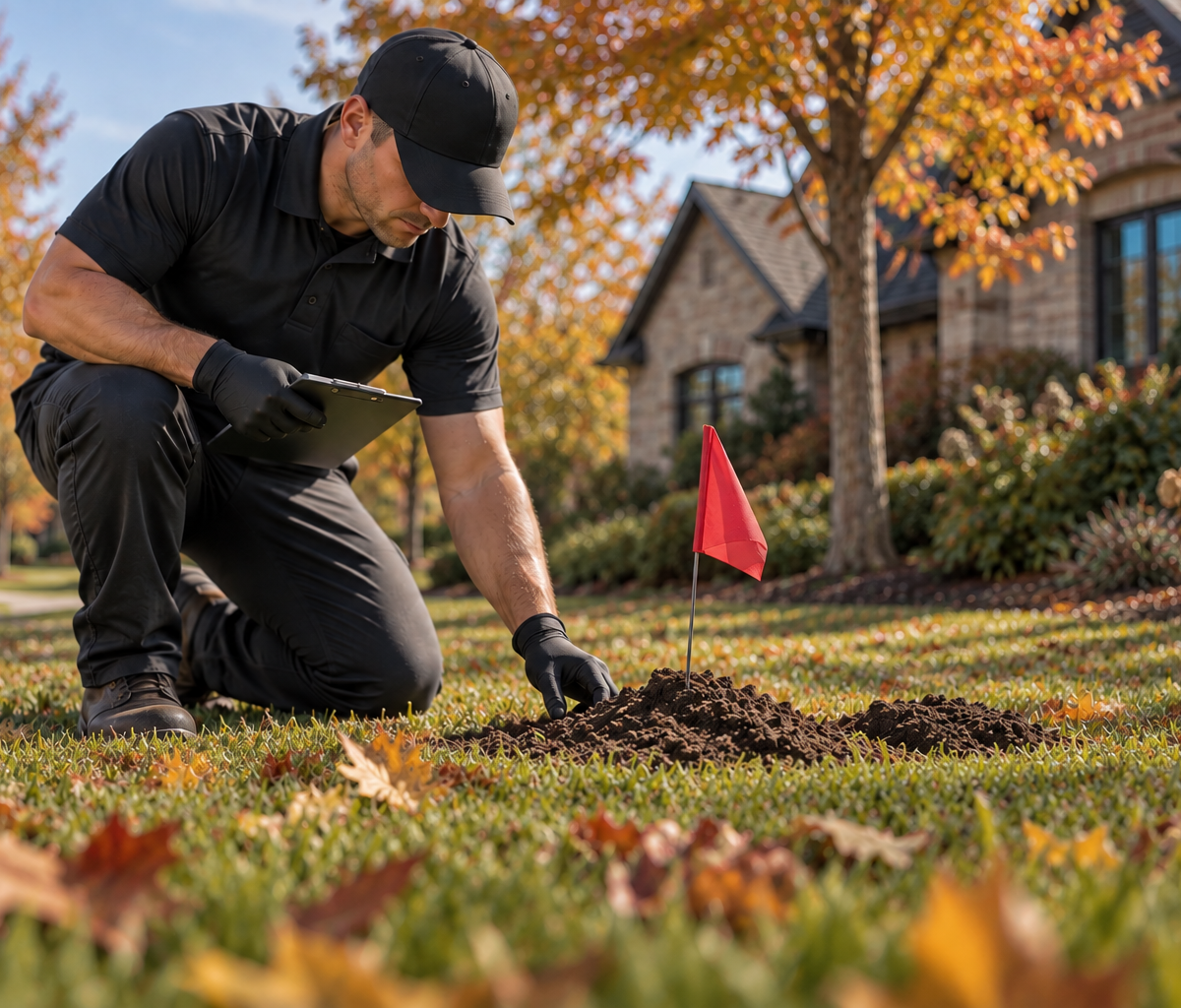
Traps are placed below ground in selected tunnels. Each location is flagged so it can be found easily during follow-up visits.
Trap locations are checked during scheduled visits. A trap may be reset or moved when activity shifts to another part of the property.
New tunnels or mounds can appear during the season. Let us know when you see fresh activity between visits so the area can be reviewed.
Flagged areas should remain undisturbed while the traps are being monitored.
Do not move flags, dig around trap locations, or try to reset the equipment. Disturbing a tunnel may cause the animal to change its route.
The trap mechanism is placed below the soil, but children and pets should still be kept away from marked areas.
Do not allow pets to dig near a flag or investigate a tunnel.
Avoid running a mower or other lawn equipment over flags. If mowing is needed, give each marked area enough room to prevent damage to the marker or trap location.
Contact us if new tunnels, ridges, or mounds appear between visits. Tell us where the activity is located or send a clear photo.
Do not flatten every tunnel or fill every mound while traps are active. Fresh signs help show where the animal is moving.
Once trapping is complete, damaged areas can be pressed down, filled, seeded, or repaired as needed.
Know Which Pest Is Active
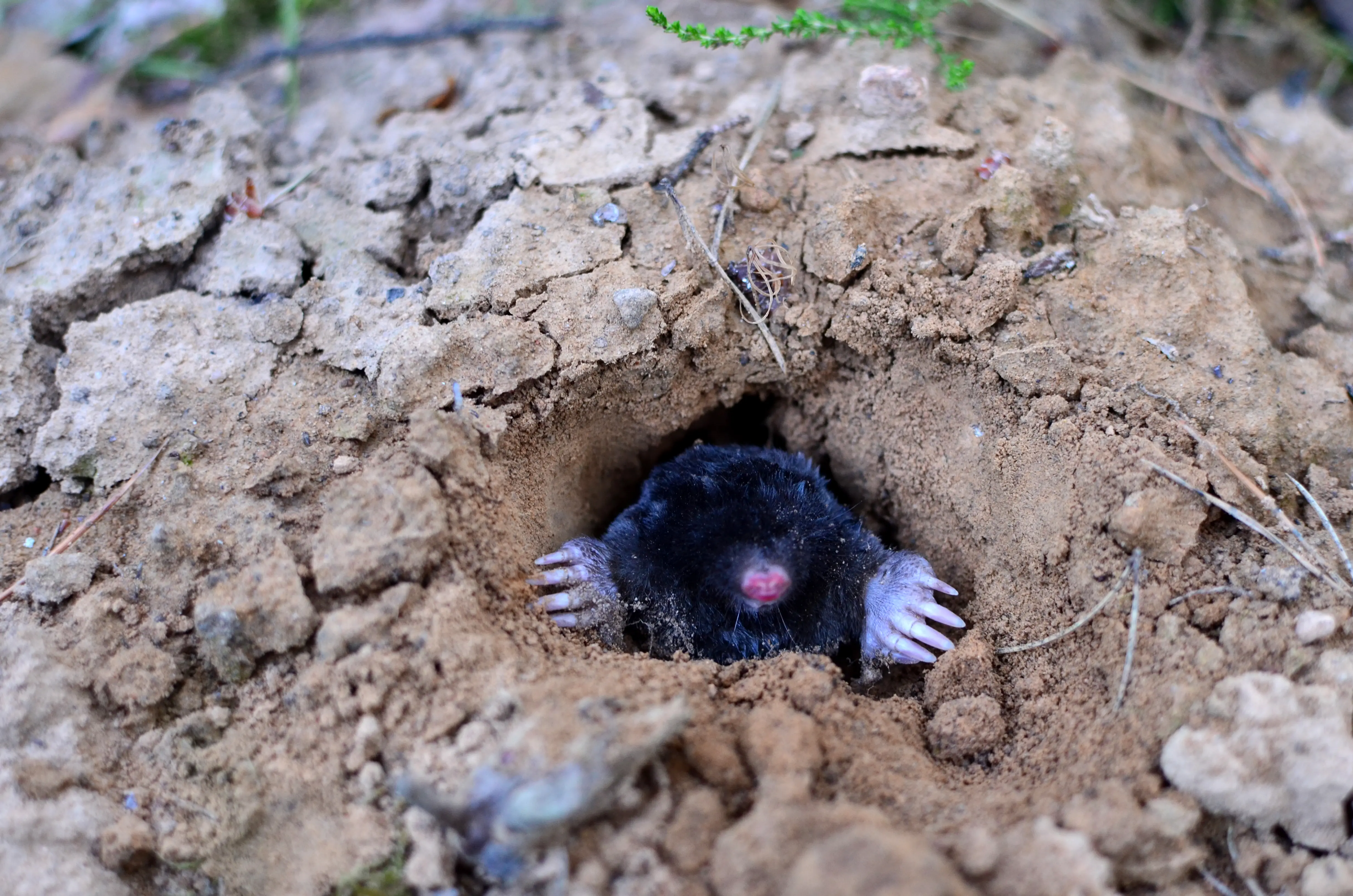
Moles and pocket gophers both live underground, but they leave different signs and are drawn to different food.
Moles feed mainly on earthworms and insects. They do not usually eat grass roots on purpose, but their tunneling can loosen soil and lift the turf.
Common signs include:
Moles remain active below ground during winter rather than hibernating. Surface activity may become less noticeable when they move deeper into the soil.
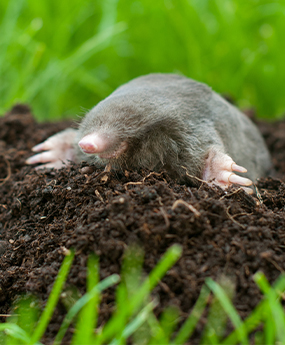
Pocket gophers feed on roots and other plant material. Their digging may damage grass, gardens, and landscape plants.
Fan-shaped or crescent-shaped soil mounds
A plugged tunnel entrance near the mound
Missing or damaged plants
Activity concentrated around roots and planting areas
The signs are not always easy to identify from one mound. The property should be checked before traps are placed.
Use Traps, Not Lawn Baits
Fitzgerald’s service uses trapping rather than placing poison bait or chemical mole products across the lawn.
Traps are set below ground in selected tunnels and marked above the surface with flags. The markers allow the crew and property owner to see where equipment is located.
Trapping still requires care around the marked areas. Keep children and pets away, do not dig near a trap, and avoid running lawn equipment over a flag.
The goal is to place traps where current activity is present, check them, and move them when the tunnel pattern changes.
Not every tunnel produces an immediate result. Burrowing animals may stop using one route and open another, which is why monitoring remains part of the service.
Seasonal Trapping Visits
Fitzgerald’s trapping season generally begins around April 15 and continues until about October 15. Weather and soil conditions can shift those dates.
Soft, moist soil often makes surface mole activity easier to see. During dry periods or colder weather, animals may move deeper underground or use different tunnels.
Seasonal monitoring allows new activity to be checked as it appears. Traps may need to be moved when the animal changes direction or begins working in another part of the lawn.
Tell us when fresh ridges or mounds show up between visits. Older tunnels may remain visible after the animal has moved on, so new soil and recent ground movement are especially useful.
Repair the Lawn After Trapping
Removing the animal does not automatically flatten tunnels or replace grass that has been damaged.
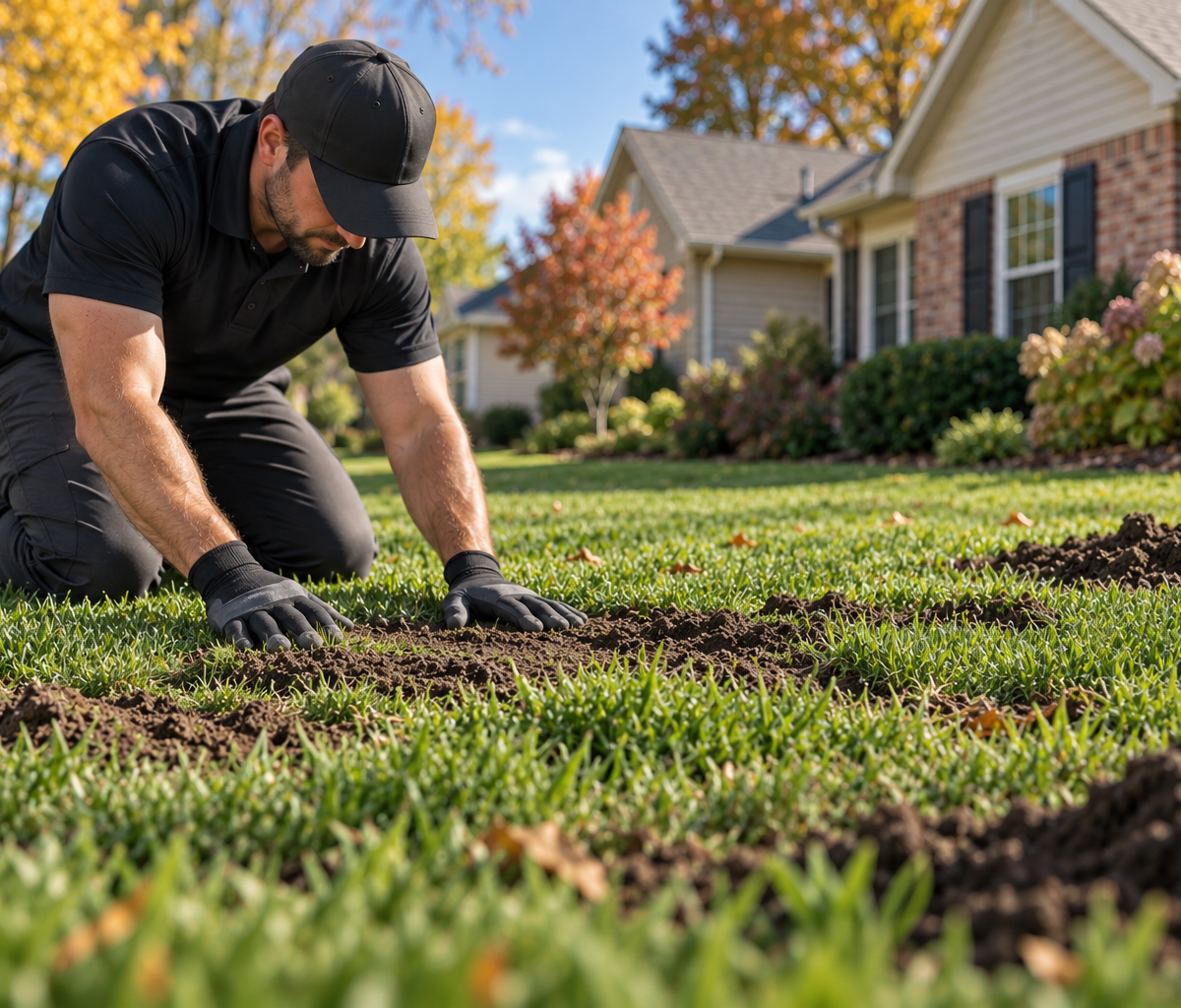
Once the trapping work is complete, raised tunnels can often be pressed back into place. Loose soil from mounds may need to be spread, removed, or used to fill low areas.
Bare or thin grass may need seed and regular watering. Areas with exposed roots or damage around shrubs and garden plants may need separate landscape care.
If animals have dug into the lawn while searching for grubs, the property may also need to be checked for a lawn insect problem. Grub treatment and mole trapping are different services.
Continue watching the yard after repairs. Fresh tunnels or new mounds may mean another animal has entered the property.
Local Seasonal Pest Service
Fitzgerald Lawn Care has served New Richmond and nearby communities in Western Wisconsin and Eastern Minnesota for more than a decade.
Our trapping service does not rely on lawn chemicals or poison bait. Traps are placed below ground, flagged, checked, and moved when activity changes.
Seasonal monitoring runs from spring through fall, depending on weather and soil conditions.
You can report new activity between scheduled visits instead of waiting for the next check. A photo and location help the crew find the newest tunnel or mound.


Burrowing damage may not be the only problem affecting the lawn.
Lawn pest and insect control addresses grubs and other insects that can damage grass and roots.
Lawn care and maintenance includes mowing, aeration, overseeding, dethatching, and seasonal cleanup.
Five-step fertilization provides lawn feeding and weed treatment from Early Spring through fall.
Mulch installation refreshes beds around trees, shrubs, flowers, and other established plants.
Snow plowing and snow removal help keep driveways, parking areas, and access points usable during winter.
Common Trapping Questions
Here are answers to common questions about tunnel activity, trap placement, seasonal monitoring, lawn access, chemicals, and repairing damaged grass.
Raised tunnels, fresh mounds, and soft ground should be checked before more of the lawn is disturbed.
Tell us where the activity is appearing and how long you have noticed it. We will inspect the property, determine the likely animal, and explain the trapping plan.