Seasonal Property Care in Roberts
Fitzgerald Lawn Care provides lawn maintenance, weed control, mulch installation, lawn pest control, mole and pocket gopher trapping, snow plowing, and snow removal in Roberts, Wisconsin. We examine the area requiring service and recommend a practical plan based on the property, current conditions, and season.
Maintenance for Roberts Homes
Roberts properties may include open lawns, newer turf, mature trees, planting beds, long driveways, roadside grass, drainage areas, and boundaries adjoining fields or undeveloped ground. Each part of a yard may respond differently to weather and regular use.
Exposed grass can dry quickly during windy or hot conditions, while low sections may collect water. Recently established lawns may develop thin areas, and frequent walking or equipment traffic can compact the soil. Open surroundings can also contribute to drifting snow and activity from burrowing animals.
Fitzgerald Lawn Care considers the location and cause of the concern before recommending lawn care, weed treatment, mulching, pest management, trapping, or snow service.
Grass growth changes throughout Wisconsin’s growing season. Rainfall, heat, shade, soil condition, and mowing frequency all influence how a lawn looks and performs.
Fitzgerald Lawn Care provides mowing, edging, aeration, and seasonal lawn maintenance for Roberts homeowners. We tailor service to the yard’s layout and current growth rather than following one approach for every lawn.
Regular mowing helps keep grass manageable and creates a more uniform appearance. Lawns may grow quickly during cool, wet weather and slow down when summer becomes hot or dry.
The mowing schedule is based on the property’s growth rate, size, accessibility, and requested level of upkeep.
Grass can spread over driveway margins, sidewalks, paths, and landscape-bed borders. Edging restores a clearer division between the turf and adjoining surfaces.
The amount of edging required depends on the property’s design and total length of its lawn boundaries.
Soil may become compacted where people, pets, mowing equipment, or vehicles repeatedly cross the same ground. Dense soil can limit the movement of moisture and air through the root zone.
Aeration creates openings in compacted areas. Fitzgerald Lawn Care checks soil firmness and grass condition before recommending this service.
Spring can produce rapid growth and soft ground. Summer may expose dry areas, while cooler fall weather changes mowing needs and prepares the lawn for dormancy.
Our recommendations account for these seasonal transitions and the condition of the turf during each period.
Controlling Unwanted Lawn Growth
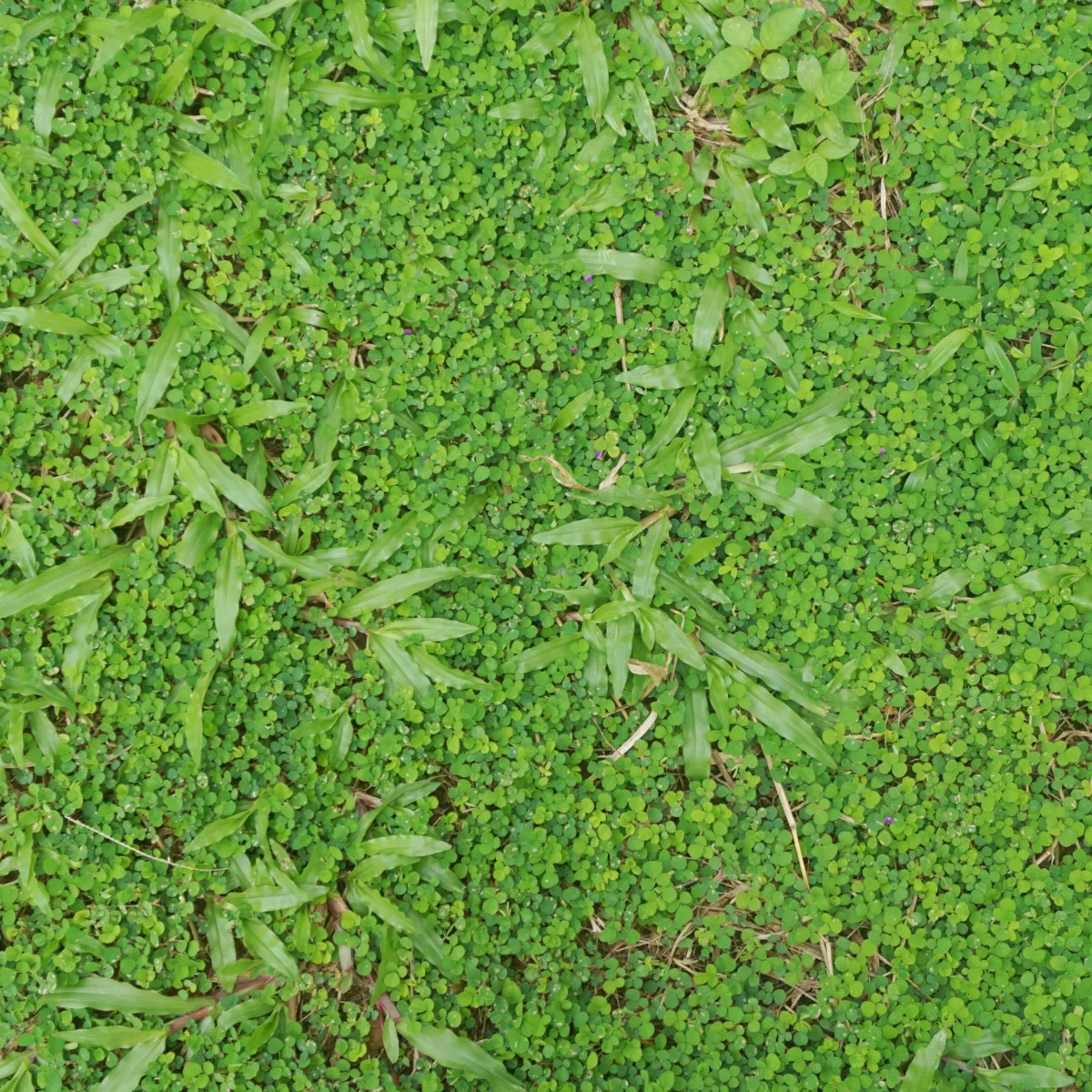
Weeds often establish where grass is sparse, soil has been disturbed, or lawn edges meet roads, fields, and natural vegetation. Newer lawns may also contain open spaces that allow unwanted plants to develop.
Fitzgerald Lawn Care identifies the weeds and evaluates the surrounding turf before selecting a treatment.
Weeds can spread through seeds, creeping stems, or established root systems. Their response to treatment depends on the species, growth stage, and time of year.
Correct identification helps match the control method to the plants growing in the lawn.
Weed treatment is directed toward appropriate lawn areas included in the service. Gardens, ornamental plants, newly seeded grass, and other sensitive locations require consideration.
Homeowners should point out recent plantings and disclose any products previously applied to the property.
Weed control does not correct weak grass coverage by itself. Compaction, drainage, shade, soil disturbance, and mowing stress may continue to leave openings where weeds can return.
We may recommend additional lawn care when another condition is contributing to repeated growth.
Mulch for Residential Landscape Beds
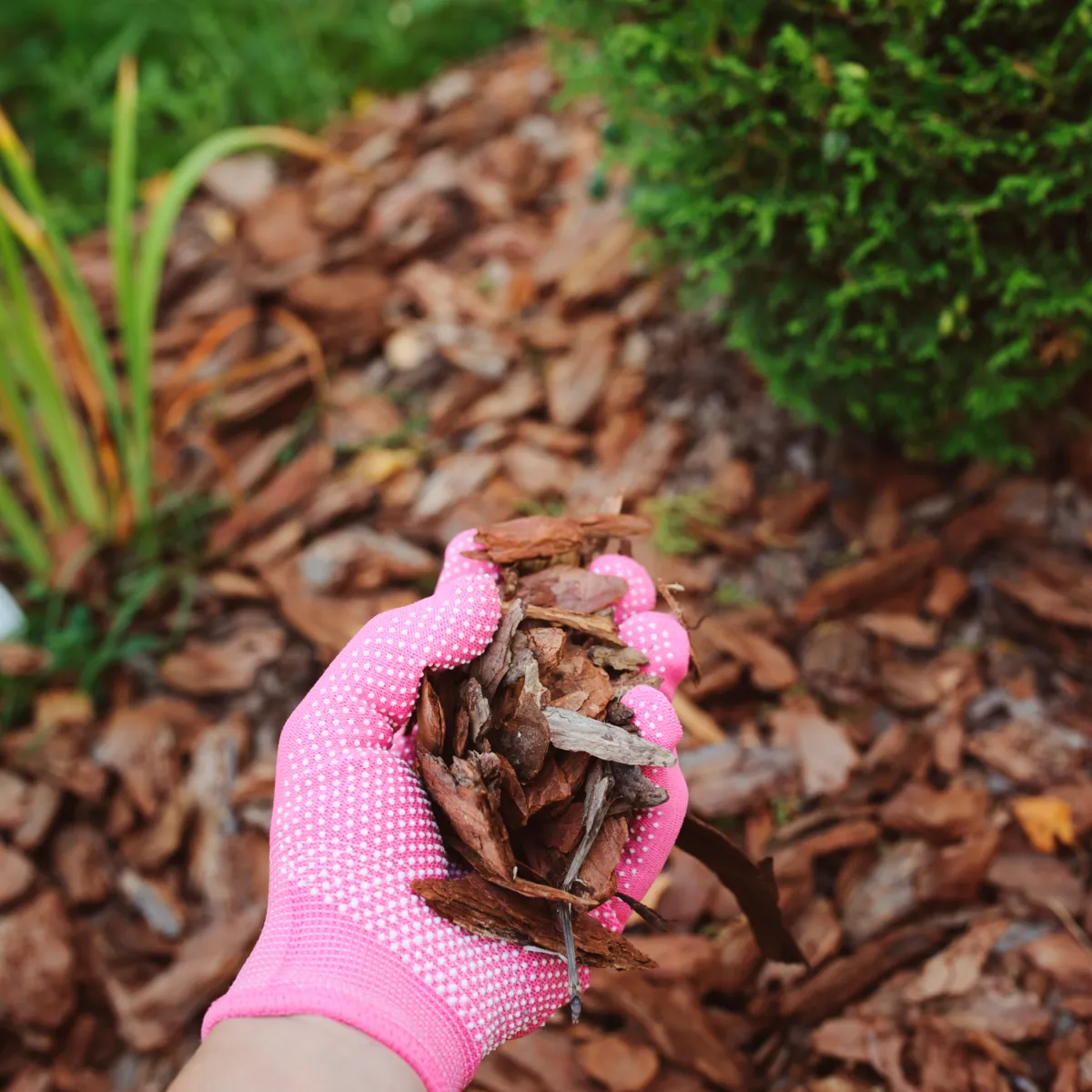
Mulch can improve the appearance of landscape beds while helping conserve soil moisture, reduce temperature changes, and suppress some weeds. Preparation and appropriate placement are important for a clean finished result.
Fitzgerald Lawn Care reviews the beds, borders, existing mulch, and installation access before preparing an estimate.
Leaves, weeds, sticks, faded mulch, and loose soil may need attention before new material is installed. Some beds require minimal preparation, while others need more extensive clearing.
We assess the existing condition so the necessary work can be included in the project.
Mulch is distributed at a practical depth throughout the agreed areas. It should not be piled heavily around tree trunks, shrub bases, plant stems, siding, or other property features.
The amount of existing material is considered when determining how much new mulch is needed.
Grass can grow into a planting bed, and loose material may spread onto nearby turf or pavement. A clear border helps separate the mulched area from its surroundings.
Existing edges can be refreshed when needed as part of the installation plan.
Diagnosis and Treatment of Lawn Insects
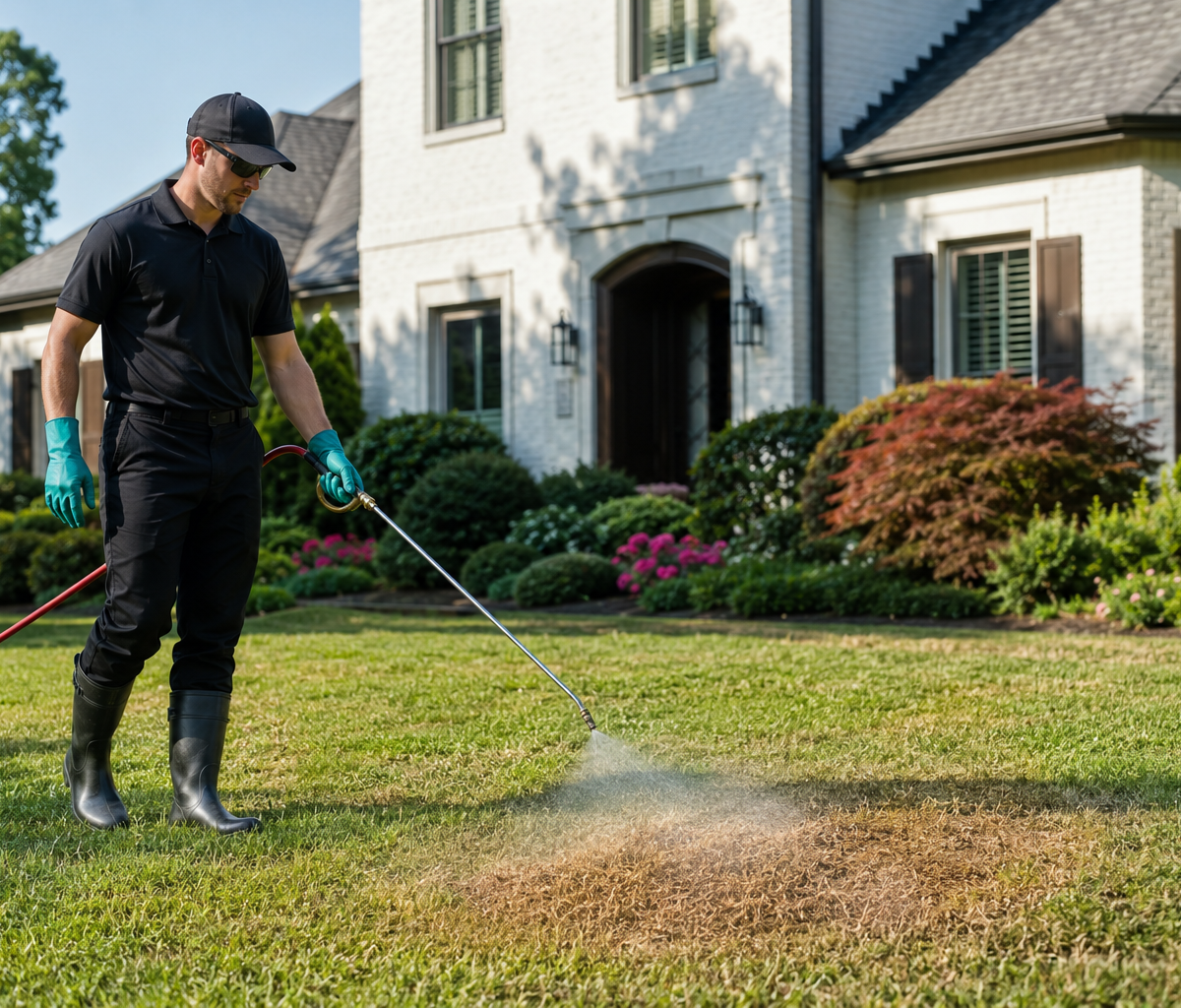
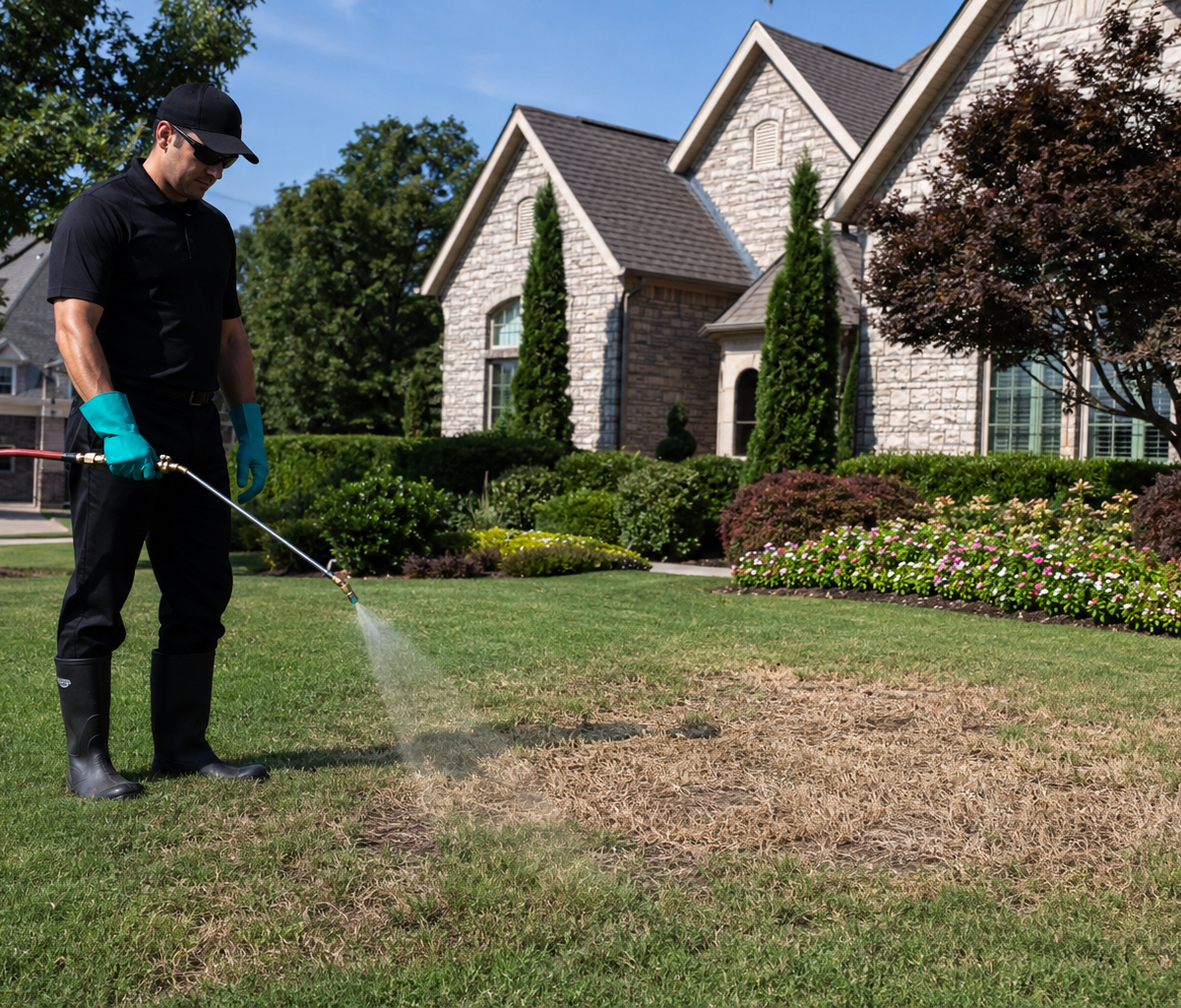
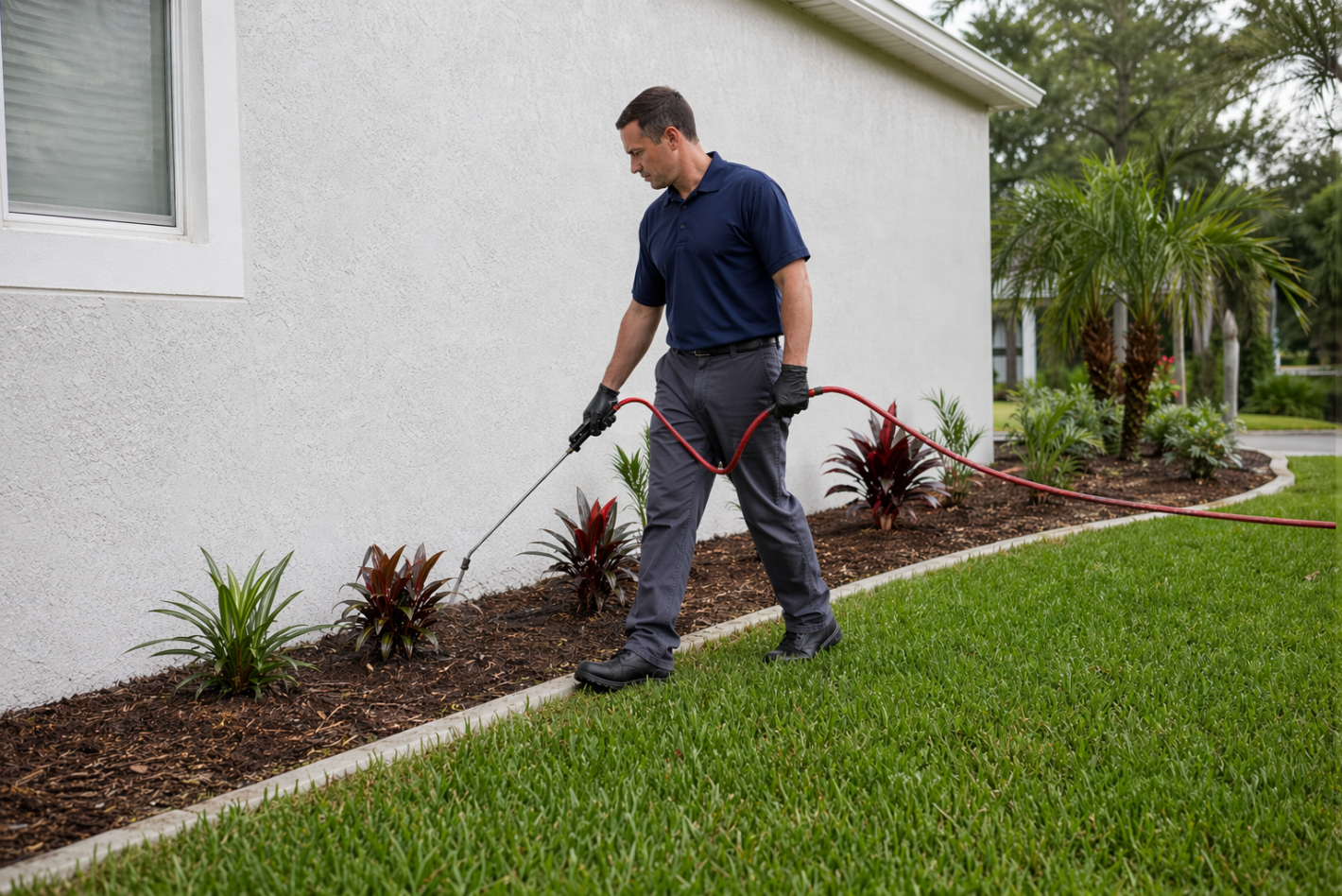
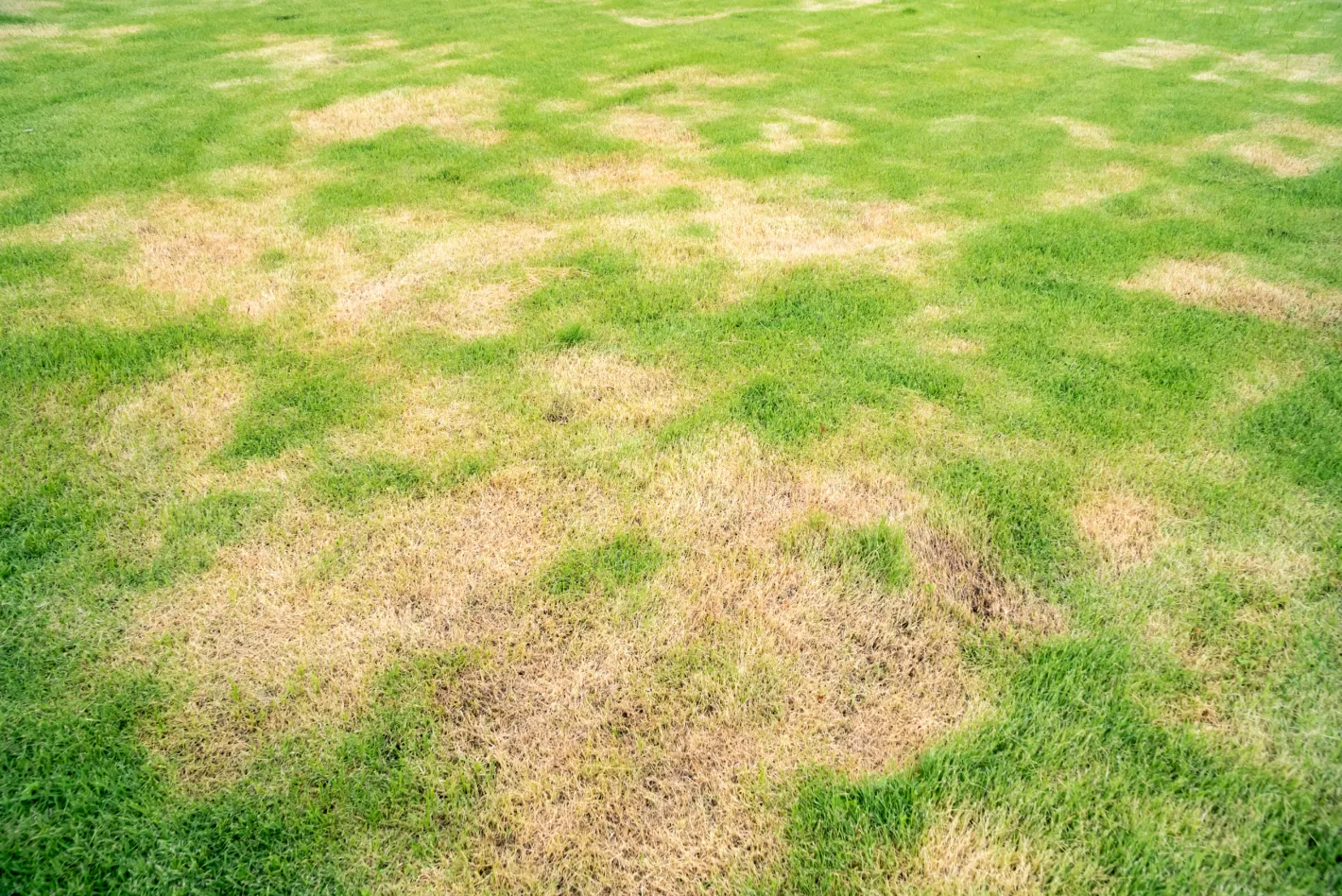
Brown or thinning grass can be caused by insects, but drought, drainage, disease, compaction, mowing damage, and pet activity may produce similar symptoms. The affected area should be inspected before treatment is selected.
Fitzgerald Lawn Care searches for evidence connecting a pest to the visible turf damage.
Grubs live below the surface and feed around grass roots. Affected turf may become weak, discolored, or easier to lift as root damage increases.
Looking beneath the grass helps determine whether larvae are present and whether their activity corresponds with the damaged patch.
Beetles and other insects may be noticed without causing lawn damage. The species, number, life stage, and location of activity should be considered.
We identify the likely insect and compare its presence with the lawn symptoms before recommending control.
Dry, exposed turf may turn brown during hot weather. Low areas may remain wet, and compacted soil can restrict roots even when the lawn receives regular rain.
These conditions are evaluated so environmental stress is not mistaken for an insect problem.
Pest treatment controls the targeted insect but does not immediately restore lost roots or grass. Recovery depends on the severity of the injury and the conditions following treatment.
We explain whether additional lawn care may help the damaged section recover.
Burrowing Animal Management
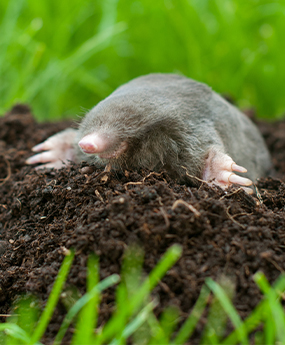
Raised ridges, loose soil, fresh mounds, and damaged roots may indicate underground animal activity. Moles and pocket gophers create different types of burrows, making identification an important first step.
Fitzgerald Lawn Care examines recent movement before choosing trapping locations.
Moles create shallow tunnels while searching for food beneath the lawn. Some routes are temporary, while others may be used repeatedly.
Fresh ridges and recently reopened passages can help identify active travel areas.
Pocket gophers dig deeper burrow systems and push soil to the surface. Their mounds may appear across the lawn or near quieter property boundaries.
The arrangement and condition of the soil help distinguish gopher activity from mole tunnels.
Traps are positioned according to active burrow signs and the layout of the affected ground. Movement may shift if an animal changes routes or if several animals are present.
Continued monitoring may be recommended when fresh disturbance appears.
Residential Winter Access
Snowfall and wind can cover driveways, garage approaches, and entrances. Open surroundings may allow snow to drift back across cleared areas, while repeated storms can reduce available storage space.
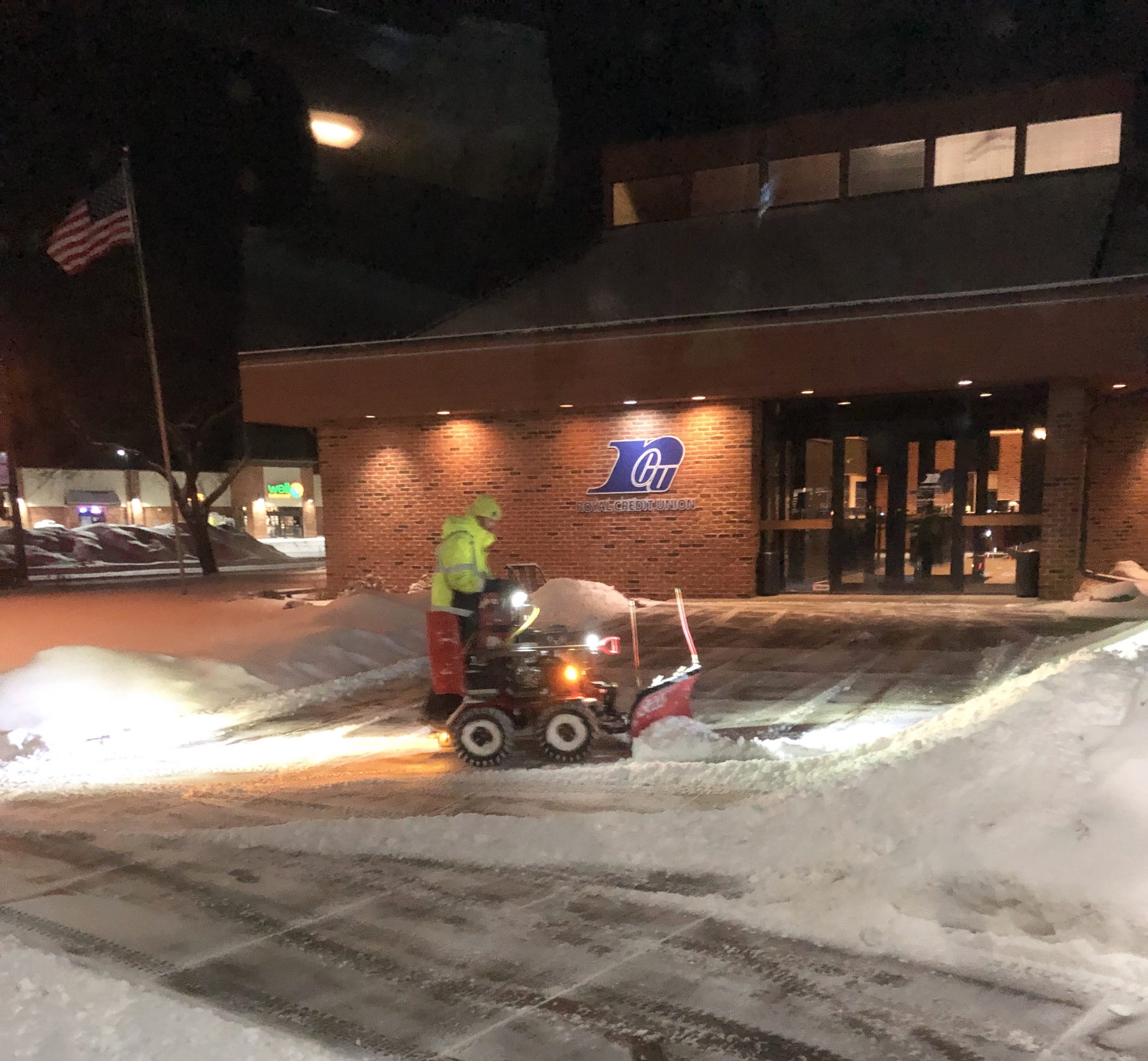
Fitzgerald Lawn Care provides residential snow plowing and snow removal in Roberts. We review driveway length, surface, slope, obstacles, turnaround space, and possible snow-placement areas before arranging service.
Driveways may be paved or gravel and can include curves, narrow entrances, slopes, and wider areas near the home. Mailboxes, landscaping, utility features, and parked vehicles may affect equipment access.
Portable obstacles should be moved, and low features should be marked before significant snowfall.
Drifting can create deep accumulation in isolated sections even when the overall snowfall is moderate. Open lawns and field edges may allow wind to move snow across the driveway repeatedly.
The property’s exposure is considered when planning snow placement.
Plowing pushes snow into designated on-site areas. Removal may become necessary when piles narrow access, block visibility, or occupy space needed for later storms.
Snow removal relocates accumulated piles away from the property.
Snow should be stored where it is less likely to block entrances, cover important features, or create avoidable drainage issues during melting.
Placement may be adjusted as accumulation builds during winter.
Conditions Around Roberts Lawns
Roberts lawns emerge from dormancy during spring, grow actively in cooler conditions, experience possible summer stress, and slow as colder fall weather arrives. Snow cover, spring saturation, wind, heat, and changing rainfall can affect each section differently.
Open turf may dry faster and experience stronger wind. Low ground can collect moisture, while repeated use may compact areas around driveways and entrances. Field edges and undisturbed land can also contribute to weeds and burrowing-animal activity.
Fitzgerald Lawn Care considers these property conditions before recommending service.
Local Residential Property Service
Fitzgerald Lawn Care provides lawn mowing, edging, aeration, weed control, mulch installation, lawn pest and insect control, mole and pocket gopher trapping, snow plowing, and snow removal for Roberts homeowners.
We evaluate the requested work, explain the recommended service, and provide an estimate based on the property’s needs.
Fitzgerald Lawn Care also serves nearby Wisconsin and Minnesota communities, including:
Roberts Lawn, Pest and Snow Questions
Fitzgerald Lawn Care provides residential lawn maintenance, weed control, mulch installation, lawn insect control, mole and pocket gopher trapping, snow plowing, and snow removal in Roberts, Wisconsin.
Tell us what service you need and where the concern is located. We will review the property, explain the recommended options, and provide an estimate.